
November 2024
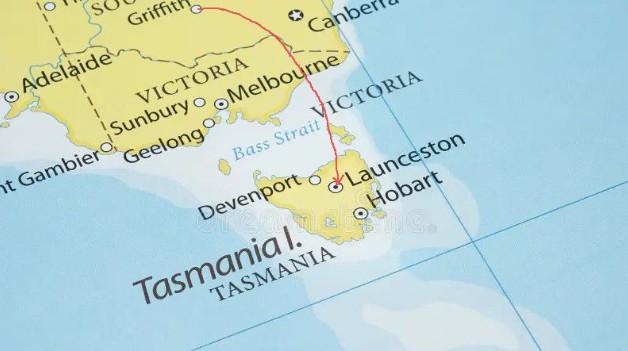
Save the Date!!
In 2025, instead of our usual annual field day, we’ve got something different in store. We’re planning a trip to Launceston and surrounding areas to explore innovative farming systems and practices as part of the Optimising Irrigated Grains Project. Block out the 18th – 21st February 2025 inclusive in your diaries!
Spots are limited, so please fill out this EOI, to save your spot and get the latest trip plans. IREC members will receive a discount for the field trip. Stay tuned for more details on the itinerary and costs! Please note attendees will need to organise and cover their own travel to Tasmania.
Keep your eyes on our socials and future newsletters for more information!
A Message of Thanks and IREC Membership Update
We are incredibly grateful to our members for your support. Your membership plays a key role in allowing us to provide valuable resources, enhance our research initiatives, host events and drive forward our mission of promoting effective irrigation practices and supporting agricultural innovation.
Transition to Calendar Year Membership Cycle
We’d like to remind all our direct deposit members (please note this excludes online credit card payments, which renew under a rolling system) that, starting January 2025, IREC will be aligning its membership cycle with the calendar year, rather than the financial year.
2025 Membership Invoices
Invoices for the 2025 calendar year are being issued to our direct deposit members. Renewing your membership will ensure that you continue to enjoy all the great benefits, including access to exclusive events, resources, and supporting our ongoing research initiatives.
Managing Your Membership
To access previous editions of the Farmers’ Newsletter or to manage your membership details, please log in to the IREC membership portal at members.irec.org.au using your email and password.
For those who prefer to switch to credit card payments, log in to My Account > Payment Methods on the portal and add your card details. Afterward, please contact us, and we will link the new payment method to your subscription.
Need Assistance?
If you have any questions or need help with updating your payment method or accessing your account, please don’t hesitate to contact us at [email protected] or call 02 6963 0936.
Thank you once again for your ongoing support. We look forward to another year of collaboration and learning with you!
New GRDC Video Grain Maize: Maximising Benefits and Production Featuring Local Grower and IREC
Assisting growers to work smarter with their inputs to increase profitability is the focus of many GRDC investments. This video explores the outcomes of recent trials into irrigated grains, specifically maize. GRDC spoke to maize grower Mitchell Wiseman and IREC’s Executive Officer Iva Quarisa.
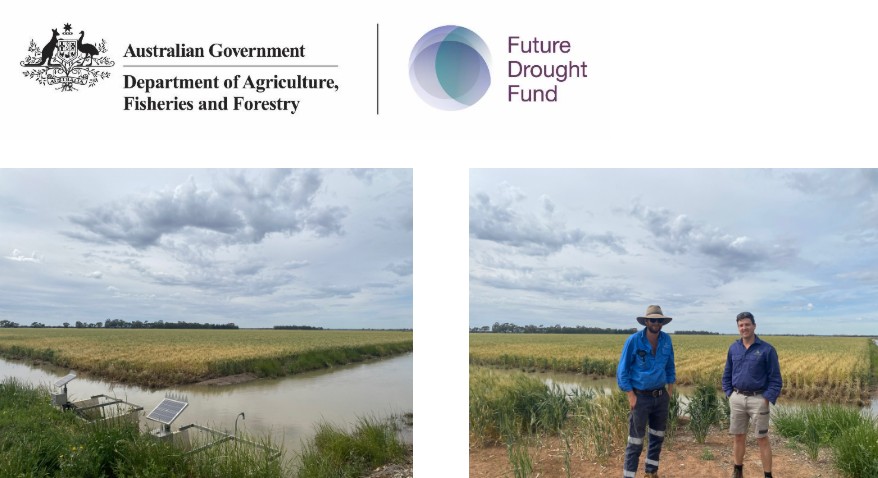
We’re excited to be part of this important work alongside the @GRDC through projects like #OptimisingIrrigatedGrains and #RiskWise, in collaboration with the Australian Department of Agriculture, Fisheries and Forestry via the Future Drought Fund and Flexible Farming Systems.
Watch the full video to explore the results of these trials here
New Flexible Farming Systems Trials
IREC has two new demonstration sites as part of the Flexible Farming Systems project. These trials are designed to showcase innovative agronomic techniques aimed at overcoming seasonal variability in crop production. Located at Whitton, the trials include a Plant Growth Regulator (PGR) in Durum Wheat demonstration and a Layouts in Cotton trial.
Plant Growth Regulator Trial
PGRs can be applied to crops to regulate plant growth with the purpose of reducing plant height to minimise crop lodging. High-yielding irrigated cereal crops are prone to lodging, especially during wet conditions, which can result in yield loss. The chemical is applied when the plant reaches stem elongation growth stage (Z31) and will result in increased root growth and shorter plant height. This will strengthen the plant and make it less susceptible to lodging.
The demo paddock has been split into two areas; the PGR treatment and a control, with all other inputs kept the same across the whole paddock.
Prior to harvest, the durum wheat paddock will be assessed to see if there is any difference in the amount of lodging between the treated and untreated areas. Grain yield will also be measured at harvest. If differences are observed, this could prove PGRs to be a valuable tool in mitigating the risks posed by more extreme weather conditions.
Layouts in Cotton Demo
A new demonstration has been established in cotton farming to significantly reduce water usage while providing shelter for emerging seedlings, ultimately improving cotton establishment.
Traditionally, cotton is sown on 1-meter hills. However, in this trial, the cotton has been sown in a double skip row formation, where a furrow is created every 4 meters, with cotton planted only on each edge of the 4-meter bed. This setup uses half the area typically required, and the trial aims to determine whether it can also reduce water usage by half. Although overall yield will be considerably lower, in years of drought and with the increased risks associated with rising water prices, this reduced input method may prove to be more profitable.
The 4-meter beds also provide space for a cover crop to be sown between the cotton rows, which will be terminated prior to cotton planting. The cover crop’s purpose is to protect the cotton seedlings from wind and help stabilize soil temperatures. While the cover crop adds an extra cost for the grower, it could enhance plant establishment, potentially increasing profitability.
This demonstration will be observed throughout the season and will be compared to a normal cotton layout paddock. We will keep you updated on results!
IREC extends its thanks to Stott Farming for hosting these trials at their site, as well as to Hayden Thomson Agronomy for monitoring the trials. We also acknowledge the support of the Australian Government for funding these important trials.
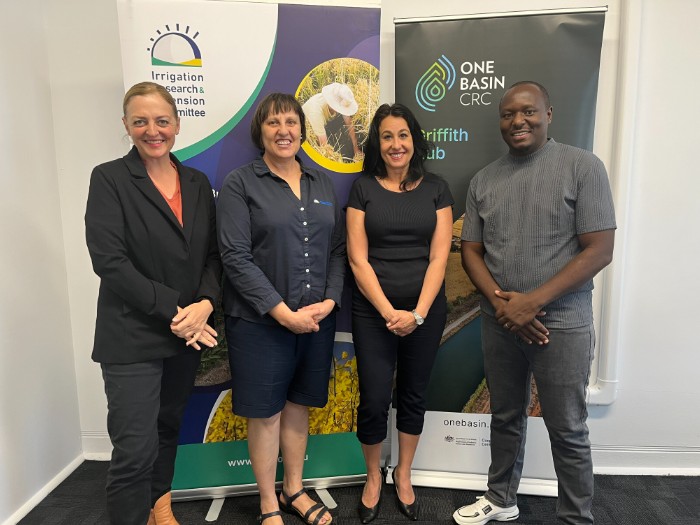
Welcome Bernadette and Miltone to One Basin CRC Griffith!
IREC welcomes Griffith Regional Hub Manager Bernadette Torresan and Miltone Kimori who is the first PhD student to commence his time within the Griffith hub as part of One Basin’s place-based research initiative to support PhD students to undertake their research in regional areas across the Basin.
Miltone has arrived from Kenya and his research focus is social marketing and community wealth building programs as pathways towards transformative change for rural basin communities within the Murray-Darling Basin.
Bernadette and Miltone will be based next door to the IREC office within the Murrumbidgee Irrigation building.
Do You Grow Maize?
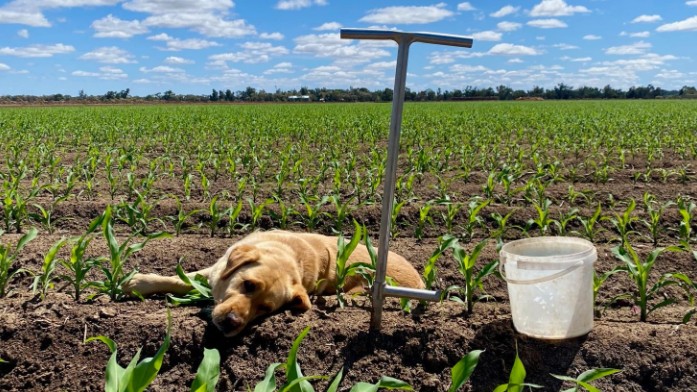
IREC has been a part of the Cool Soil Initiative for a number of years and we are looking to expand our number of maize growers.
The Cool Soil Initiative is about helping farmers build soil carbon and improve farming practices, whilst also allowing farmers to find out their emmission results using the Cool Farm Tool. The project also involves free soil testing.
IREC are after more maize farmer’s to join the project, so if you are interested please contact IREC Project Officer:
Sarah McCaskie
E: [email protected], M: 0449 511 507
Jan Cathcart Scholarship 2025
The SunRice Group is calling on aspiring women in agriculture to apply for the Jan Cathcart Scholarship, which offers $10,000 per year for up to three years in financial assistance, for tertiary study starting or being undertaken in 2025.
If you’re a female shareholder, grower, employee or an extended family member, you can apply now by visiting the link here: sunrice.com.au/scholarships . Applications close on 9 December 2024.

RGA 2025 Next Gen Leaders Program
Expressions of Interest are open for RGA’s Next Gen Leadership Program. This four-day interactive residential program will focus on industry leadership development in RD&E, policy, advocacy, and sustainability of the Rice Industry.
11th – 14th February 2025
Deniliquin, NSW
Expressions of Interest will close on 10 January 2025. Click here to learn more and submit your EOI.
This program is fully funded through the Building Capacity in the Australian Rice Industry Project, and includes all meals and accommodation.